I stumbled upon a article on Japanese philosophy one morning — a slow, reflective read I picked up to unwind. I researched more on various japanese concepts. Somewhere between Ikigai and Kaizen, I found myself trying to relate how these concepts can be applied in software world. These ideas weren’t abstract cultural relics; they were blueprints for craftsmanship — patience, simplicity, and purpose — everything our modern engineering culture seems to be sprinting away from.
And I couldn’t help thinking: everything the Japanese said about art and mastery applies just as well to software engineering. We work in a field obsessed with speed, frameworks, and automation. But beneath all that, there’s a quieter layer — the pursuit of craft. The discipline to do things beautifully, even when nobody’s watching.
Over the years, across startups, consulting gigs, and product companies, I’ve seen these philosophies play out in real, sometimes painful ways. They’ve shaped how I write code, design systems, and lead people. Here’s what I’ve learned.
🔗Shugyō — The Path of Relentless Discipline
Ritual Suffering: Purposeful discomfort toughens the mind. Practicing hardship frees us from craving comfort and prepares us for difficult achievements.

There's a kind of engineer you occasionally meet — not the loudest, not the fastest, but the one who treats their work with quiet devotion. They don't just code; they practice.
I saw that spirit once at Zomato. There was a query buried deep in the system — one of those things everyone ignored because “it works well enough.” Then one afternoon, a junior engineer decided to look into it. Nobody asked him to; it wasn’t part of a sprint. He just wanted to understand it better. By the end of the week, he’d rewritten it so elegantly that it ran twenty times faster and cut infra costs dramatically.
That’s Shugyō — discipline for its own sake. The quiet devotion to refine, not for praise or points, but because your standards demand it. It reminded me that mastery doesn’t come from velocity, but from care — from treating every line of code like a craft, not a commodity.
🔗Some ways to practice this
- Review one old piece of code every week purely for learning.
- Spend 15 minutes a day studying a system component you didn't write.
- Treat debugging like meditation — slow, focused, iterative.
- Refactor something small every day; repetition breeds instinct.
🔗Ikigai — The Reason for Being
Your "Why": Finding the intersection of what you love, what you're good at, what the world needs, and what sustains you turns routine into meaningful ritual and daily effort into lasting purpose.
After a few years in engineering, the "what" and "how" start to blur. What begins to matter is why.
I discovered my Ikigai while consulting for a trading company. They had a neglected service that everyone avoided — a slow, bloated relic running in production because nobody dared touch it. It wasn’t high on the company’s priority list, but something about it drew me in.
We spent a few weeks refactoring it — simplifying logic, cleaning abstractions, and tuning for performance. When we were done, it was beautiful: a service that scaled elegantly on minimal compute. Months later, I saw its design patterns spreading through the codebase. Engineers referenced it, built on it, learned from it.
That was Ikigai — the intersection of what you're good at, what you love, and what the world quietly benefits from. It's when your work stops being about shipping tickets and starts being about shaping culture. Ikigai isn't in your job title. It's in the impact that quietly outlives you.
🔗Some ways to practice this
- Revisit your personal "why" monthly — what kind of systems or impact give you energy?
- Balance "what I want to learn" with "what my team needs."
- Mentor one engineer — legacy isn't code, it's people.
- Align your daily work with a cause bigger than the feature.
🔗Kodawari — Obsessive Attention to Detail
Pursuit of Excellence: Focus on doing simple things perfectly—not on impressive tasks. Paying close attention to every detail leads to mastery, like a sushi master perfecting each grain of rice.
There's an invisible signature in every great system — the small choices that make it feel effortless. Kodawari is that obsession with invisible quality. It's not perfectionism; it's pride expressed through precision.
I once reviewed a pull request that only changed log messages. At first, I almost skimmed over it — until I realized every message had been rewritten to tell a story. Each one explained not just what the system was doing, but why.
It seemed trivial at the time. But during a production incident weeks later, those logs became our guide. We debugged calmly, following that quiet narrative left by someone who cared.
That's Kodawari — the invisible empathy of engineering. When you polish what no one notices, you create systems that are kinder to the next person who touches them. And when leaders model that care, it spreads silently across teams, turning codebases into reflections of culture.
🔗Some ways to practice this
- Never leave a variable, test, or log ambiguous.
- Write self-documenting code — your future self is your reader.
- Craft commit messages like journal entries.
- Review code for clarity, not cleverness.
🔗Shikata Ga Nai — Graceful Acceptance
Accepting What You Can't Control: Let go of things you can't influence. Redirect energy to what can be changed, reducing stress and wasted effort.
"Shikata Ga Nai" means "it cannot be helped." Not as defeat, but as clarity — the wisdom to let go of what you can't control.
I learned it the hard way when my own startup had to shut down during the COVID lockdown. We had built a payments platform with heart and precision — carefully crafted software, a clear plan for growth, and a small but loyal base. Then the world stopped. Commerce froze. Our runway evaporated.
For months, I replayed every decision, every missed chance, every “what if.” But some things are simply bigger than us. No algorithm or design pattern can outmaneuver a global freeze in trade.
Letting go of that company hurt. But over time, I came to see it as one of my most valuable lessons. Acceptance is not surrender; it's composure. It's the strength to bow, learn, and rebuild with clarity instead of resentment. Shikata Ganai is what keeps engineers sane in a world of outages, pivots, and reorgs. It's the grace that separates those who burn out from those who grow.
🔗Some ways to practice this
- When production breaks, focus first on containment, not blame.
- Practice separating ego from feedback.
- When priorities shift, ask, "What can I still influence?"
- Build calmness into team rituals — breathing room breeds judgment.
🔗Kintsugi — The Art of Golden Repair
Embracing Imperfection: Imperfections and mistakes record your growth, making your journey real and valuable. Flaws are not failures but signs of learning and progress.
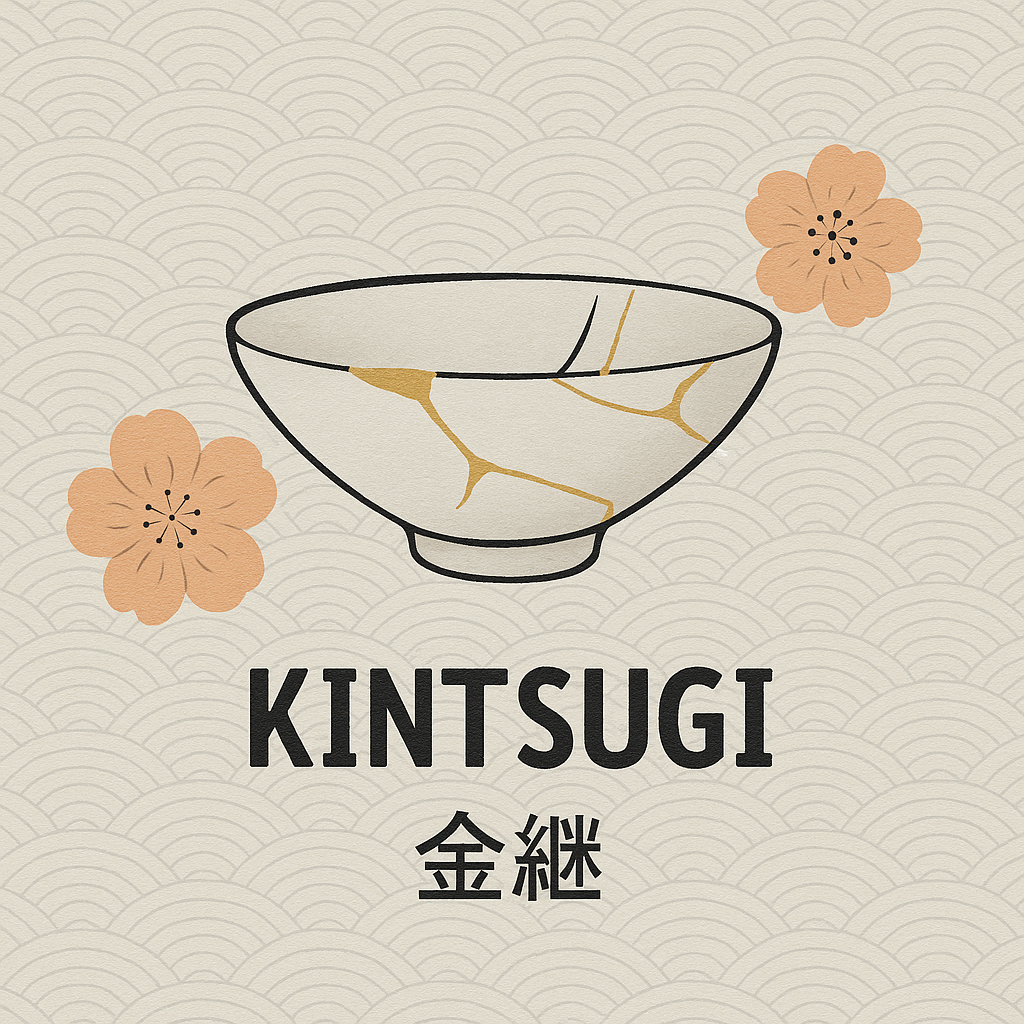
In Kintsugi, when pottery breaks, the cracks are repaired with gold. The flaw becomes the highlight.
One of my earliest lessons in Kintsugi came from chaos. A experienced engineer, who was in the system for years, accidentally deleted our production database. Just like that — millions of rows, gone.
There was shock, of course. But what I remember most was what didn’t happen: nobody shouted. We stayed calm, restored backups, verified data, and three hours later, the system was back. The next morning, that engineer showed up, expecting punishment. Instead, we thanked him for staying through the night and learning.
That incident became part of team folklore — our shared crack filled with gold. We improved our safety checks, changed deployment rules, and wrote a postmortem so transparent that new hires still read it today.
That's Kintsugi: you don't erase failure; you honor it. Our scars, when owned openly, become part of our architecture's character — and our own.
🔗Some ways to practice this
- Conduct postmortems that teach, not punish.
- Celebrate fixes that came from failures.
- Leave documentation trails explaining why something broke — it becomes gold for others.
- Share stories of resilience across teams; normalize imperfection.
🔗Kaizen — Continuous Improvement
1% Daily Improvement: Focus on one small thing to improve every day. Small, consistent improvements accumulate into massive results over time.
Everyone loves a grand rewrite. But the truth is, great engineering isn't made in leaps; it's made in increments.
Kaizen is the discipline of continuous, patient improvement — the humility to make one small thing better every day. It’s the engineer who trims CI time by 1 minutes. The architect who deletes one unused service dependency. The team that reviews incident playbooks monthly, not after disaster strikes.
Over time, those small improvements compound into resilience. You look back after a year and realize that the system — and the team — are both sharper, calmer, and faster. Kaizen doesn't make headlines, but it builds organizations that quietly endure while others burn out chasing revolutions.
It's the opposite of "move fast and break things." It's "move mindfully and never stop improving."
🔗Some ways to practice this
- Commit to one small improvement daily — in code, tooling, or communication.
- Automate what annoyed you last week.
- Revisit processes quarterly — what friction can we remove?
- Treat every feedback cycle as a sharpening stone.
🔗Danshari — The Art of Letting Go
Decluttering Life: Remove physical, mental, and emotional clutter to create focus. Deep focus on a few key practices instead of spreading attention thin.

Every engineer eventually faces the pain of deletion. We pour ourselves into designs, abstractions, and systems — until one day, the kindest thing we can do is retire them.
I once decommissioned a service I had built years earlier — one that I was deeply proud of. It had served its purpose, but now it was standing in the way. Shutting it down felt like dismantling a piece of myself. But when it was gone, the architecture breathed easier. Fewer moving parts. Cleaner ownership. Clarity replaced clutter.
That's Danshari — the courage to let go. Not just of code, but of control, ego, and attachment. Letting others take over, make different choices, even undo your best work — that's the true test of maturity.
Simplicity isn't weakness. It's refinement. Every great architecture is a story of subtraction.
🔗Some ways to practice this
- Delete one unused feature or script each sprint.
- Simplify architecture diagrams ruthlessly.
- Practice emotional decluttering — hand over ownership gracefully.
- Remember: minimalism is an act of respect, not laziness.
🔗The Way Forward — Craftsmanship in the Age of AI
I was also wondering how all this fits into the age we’re entering — an age where AI can write code, generate designs, and even review pull requests. If machines can produce working software faster than any human, what’s left for us to master?
Some think this makes craftsmanship obsolete. I think it makes it essential.
AI can generate syntax, but not sense. It can assemble components, but it doesn’t understand why one abstraction feels cleaner than another. It has no instinct for when code is technically correct but spiritually wrong.
That’s where Shugyō comes back — discipline as discernment. AI can propose a dozen solutions, but only a disciplined engineer knows which one belongs in the system.
Kodawari becomes our human fingerprint. AI can mimic patterns, but it can’t care. It doesn’t feel the unease of a leaky abstraction or the elegance of a well-named function. Taste still belongs to people.
And Kaizen — perhaps the most human of all — will matter even more. As tools evolve weekly, the teams that thrive will be those who continuously improve how they learn, adapt, and collaborate. Continuous improvement won’t just be a principle; it will be a survival skill.
Even Shikata Ganai and Kintsugi will find new meaning. AI will fail in strange, opaque ways. Models will hallucinate, pipelines will misbehave, and we’ll need engineers who can respond not with panic, but with patience — who can turn each breakdown into institutional gold.
In this new era, our value shifts from writing code to understanding code — from producing output to cultivating taste, context, and care. AI may take over the mechanics, but the meaning of engineering — the craft of building things worth keeping — remains profoundly human.
Because when machines can do almost everything, the only thing left worth mastering is how to do it beautifully.
🔗The Way of the Samurai Engineer
The Japanese have a word for “the way” — Dō.
The samurai had Bushidō, the tea masters their Chadō, the calligraphers their Shodō.
Perhaps ours is a new kind of Dō — a Kōdō for the engineer: the Way of Craft and Creation.
We build distributed systems, but the most complex system we’ll ever design is ourselves — our judgment, our taste, our calm. Tools evolve. Frameworks fade. But craftsmanship endures.
And perhaps that’s the quiet destiny of every senior engineer — to become less a builder of systems, and more a student of the way.